
Bottom line:
• A fair offer from an estate jewelry buyer reflects the piece’s liquid resale value, not its insurance appraisal or retail replacement cost.
• Knowing the difference between appraisal types and what buyers evaluate protects you from underselling inherited or pre-owned pieces.
• Manhattan sellers benefit from a competitive local market, but preparation still matters.
When you want to sell inherited or pre-owned jewelry in New York City, the single most useful thing you can do is understand how buyers arrive at their numbers. A fair offer is not the same as a high appraisal, and the gap between those two figures is predictable once you know the framework.
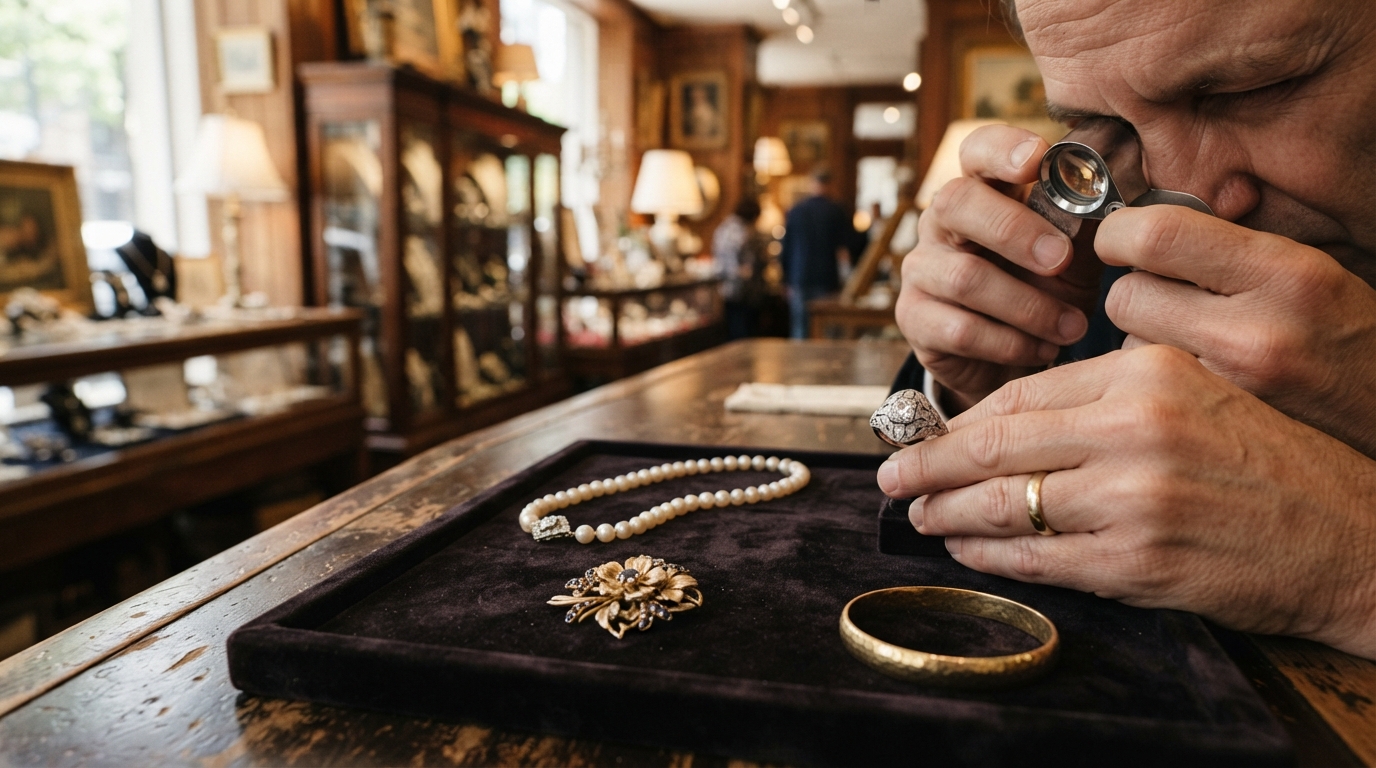
Working with a reputable estate jewelry buyer in Manhattan NY means engaging with a structured valuation process, not a guessing game. Fine jewelry and precious metals require specialized attention, and an experienced antique jewelry buyer evaluates gold, diamonds, and vintage pieces with precision. The more you understand that process before you walk in, the better positioned you are to assess any offer you receive.
How Buyers Determine the Value of Estate Jewelry
Estate jewelry appraisal values represent different ways of determining what a piece is worth based on its purpose. The four main standards are insurance replacement price, estate retail value, estate liquid value, and intrinsic value.
When a buyer makes a purchase offer, they are working from the estate liquid value standard, not the insurance figure. The estate liquid value is the price a wholesaler is willing to pay for your piece, based on current market trends, demand, and comparison prices. This value offers the most accurate look at values for items that can be resold into secondary markets, making it the key to understanding the value of jewelry that may be liquidated in an estate.
Unlike modern jewelry, where value is driven primarily by metal weight and stone quality, antique jewelry is assessed through a multidimensional lens where historical period, craftsmanship, rarity, and maker attribution all contribute significantly to the final value.
The Jewelers of America appraisal guide notes that fair market value appraisals reflect an actual selling price between a willing buyer and seller when neither is compelled by time or need, and that fair market value must represent the item’s value in its current, used condition.
Why Buyer Offers Are Lower Than Appraisals
Many sellers are surprised when a buyer’s offer falls below their insurance appraisal. The reason is structural, not arbitrary.
Fair market value for jewelry is based on auction results before deducting buyer and seller fees that can collectively exceed 45% of the sale price — that difference explains why jewelry appraisals often feel disconnected from financial reality.
A direct buyer skips the auction channel entirely, which means they also skip those fees. Their offer reflects what they can realistically recover when the piece is resold, plus a margin to cover operating costs and risk. That is not a low-ball tactic; it is the standard economics of the secondary jewelry market.
Here is how the four valuation types compare in a typical selling scenario:
|
Valuation Type |
Used For |
Relation to Buyer Offer |
|
Insurance Replacement |
Coverage claims |
Highest; not a sale price |
|
Estate Retail Value |
Pre-owned retail pricing |
Above buyer offer |
|
Estate Liquid Value |
Wholesale/resale pricing |
Closest to buyer offer |
|
Intrinsic Value |
Raw metal/gem worth |
Floor price baseline |
What Buyers Actually Examine During Evaluation
To evaluate antique jewelry, expert buyers look at the cut, clarity, weight, and type of carat of the precious metals — gold, platinum, or silver — before offering a price.
Beyond materials, a thorough buyer also considers:
• Maker attribution: Signed or hallmarked pieces from recognized designers carry a premium above raw material value.
• Period and rarity: Rarity plays a vital role in determining fair market value of estate and vintage jewelry. Rare pieces often fetch higher prices due to their uniqueness and scarcity, and particular designs, eras, or makers can increase the rarity factor significantly.
• Current collector demand: Buyers look at the whole picture — metal value, gem value, maker value, period rarity, and current collector demand — and for significant pieces, reference recent auction results from Christie’s, Sotheby’s, Bonhams, and Phillips to ensure offers reflect what the piece would actually bring in today’s market.
• Condition: Chips, missing stones, or replaced clasps reduce resale potential and are factored into the offer.
How to Evaluate Whether an Offer Is Fair
A fair offer is one that is transparent, explained, and consistent with the estate liquid value standard. Use these checkpoints before accepting or declining:
1. Ask for a breakdown. A reputable buyer should be able to explain what weight, stone grade, and market factors went into the number.
2. Get more than one opinion. Manhattan’s density of dealers makes comparison practical. Two or three independent evaluations give you a reliable range.
3. Separate sentimental value from market value. The two rarely align, and conflating them leads to unrealistic expectations on both sides.
4. Bring any documentation you have. Prior appraisals, original receipts, or gemological certificates help buyers work faster and more accurately.
Selling estate jewelry is rarely just a financial decision. These pieces often carry history, craftsmanship, and intrinsic value that is not immediately obvious. Before you sell, understanding what you have and how it is professionally evaluated can mean the difference between a fair offer and a costly mistake.
Frequently Asked Questions
What is a reasonable percentage of appraised value to expect from a buyer? There is no fixed industry standard, but estate liquid value — what a buyer pays — typically runs below estate retail value. The gap depends on the piece’s resale demand, condition, and maker. Signed designer pieces or high-demand periods often close that gap.
Should I get an independent appraisal before selling? It is not required, but it gives you a reference point. A professional jewelry appraiser should be a member of a respected national appraisal organization, like the National Association of Jewelry Appraisers, which ensures they complete continuing education and conform with industry standards such as the Uniform Standards of Professional Appraisal Practice (USPAP).
Does the buyer need to keep my jewelry to make an offer? No. Reputable buyers evaluate pieces in person and make offers on the spot. You can bring your jewelry for in-person evaluation, and after evaluation, a buyer provides an immediate offer with same-day payment if you accept.
What types of estate jewelry are most in demand in Manhattan? Signed pieces, Art Deco and mid-century designs, high-quality diamonds, and pieces with verifiable provenance tend to attract the strongest offers in the current Manhattan market.
If you are ready to get a professional evaluation, Old & New Shop serves the Manhattan and greater NYC area with experienced buyers who evaluate gold, diamonds, and vintage pieces. Old & New Shop handles everything from single heirloom pieces to full estate collections, with a straightforward process and transparent offers. Bring your pieces in, ask questions, and compare the offer against your research — that is exactly what a knowledgeable seller should do.