
In brief:
- Professional land clearing prepares Waco-area properties for development, farming, or pasture restoration by removing trees, brush, stumps, and debris.
- Choosing the right method forestry mulching, grubbing, or stump grinding depends on your soil type, project scope, and local permit requirements.
Professional land clearing services in Waco TX transforms overgrown or wooded parcels into usable land, and selecting the right approach from the start saves time, money, and regulatory headaches. Whether the goal is a new build, agricultural expansion, or simple lot cleanup, understanding the available methods and planning steps puts you in a stronger position before the first machine rolls onto your property.
If you are searching for land clearing services in Waco TX, the Central Texas landscape a mix of cedar thickets, mesquite, and heavy clay soils calls for equipment and techniques suited to that specific terrain. Forestry mulching near Waco and across Central Texas requires a contractor familiar with the region’s vegetation and soil conditions.
Common Land Clearing Methods in Central Texas
No single method fits every project. The table below compares the most common approaches used in the Waco area.
|
Method |
Best For |
Soil Disturbance |
Debris Outcome |
|
Forestry Mulching |
Dense brush, cedar, light timber |
Low |
Mulch left on-site |
|
Grubbing / Dozing |
Large trees, root removal |
High |
Material hauled or burned |
|
Stump Grinding |
Post-clearing stump removal |
Minimal |
Wood chips remain |
|
Hand Clearing |
Selective vegetation removal |
Very low |
Debris piled manually |
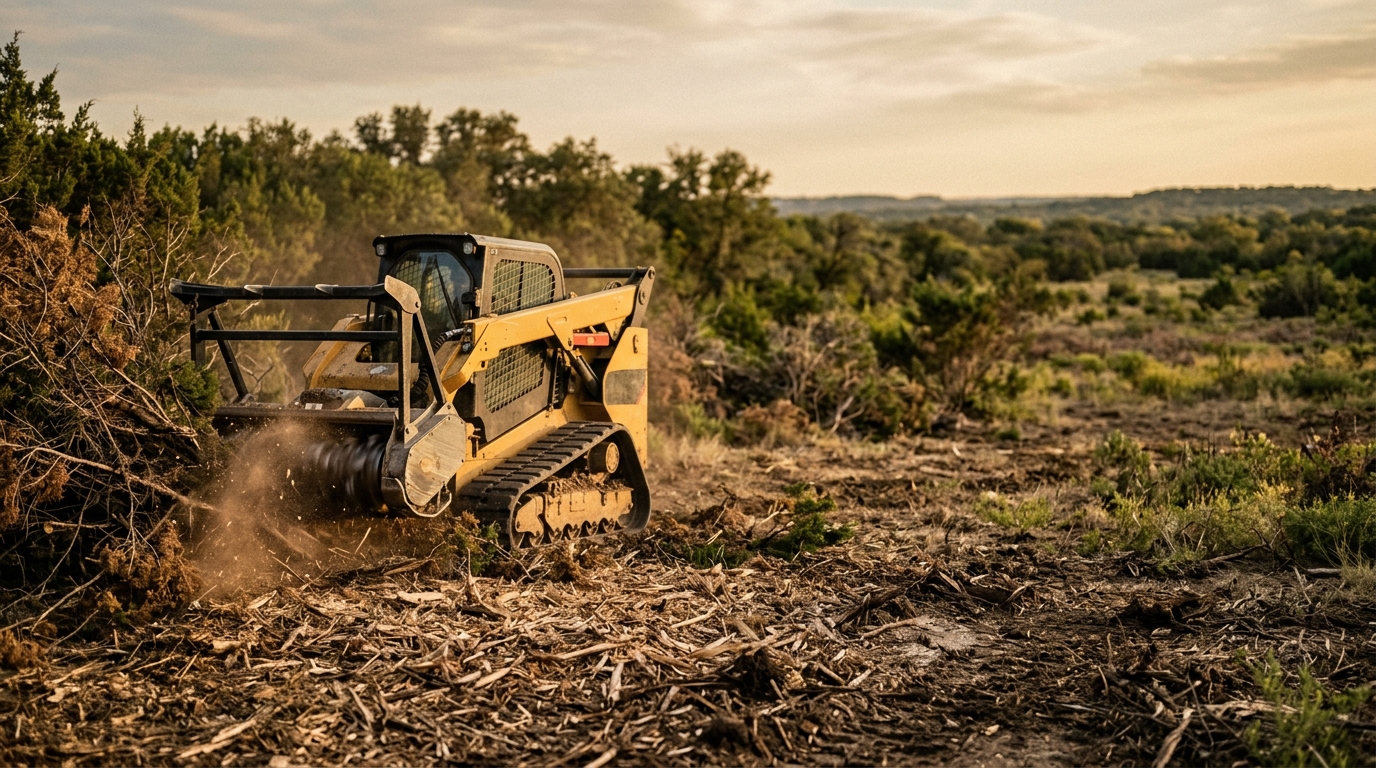
Forestry mulching uses a specialized machine to process brush and trees in place. Nothing is uprooted, and no soil is destabilized the process leaves behind a blanket of organic mulch that benefits the surrounding environment.
Conventional methods like plowing or grubbing cause significant soil disturbance and create brush debris that must be hauled away or burned. Forestry mulchers mounted on compact track loaders can operate on steep terrain with wider tracks that disturb the land less than large dozers, leaving a nutrient-rich mulch that acts as a natural erosion barrier.
Beyond mulching, professional land clearing companies in Texas typically offer forestry mulching, brush pile mulching, stump grinding, tree grubbing, and skid steer services. Tree grubbing is well-suited for removing tough stumps and roots that would otherwise obstruct development or landscaping plans, leaving the land smooth and ready for the next phase.
Benefits of Professional Land Clearing
Clearing land yourself may seem cost-effective, but professional crews bring equipment, experience, and regulatory awareness that reduce long-term risk.
- Site readiness: Cleared land can move directly into grading, foundation work, or planting without secondary cleanup.
- Erosion control: Mulch left on-site from forestry mulching stabilizes soil and retains moisture between rain events.
- Selective preservation: Professional brush clearing allows selective removal of vegetation while leaving desirable trees and root structures undisturbed.
- Faster timelines: Equipment like the ASV 135 skid steer paired with a Loftness mulcher handles projects efficiently, reducing overall project duration.
The clearing method you choose directly affects soil stability, drainage patterns, regrowth risk, and long-term usability factors that matter whether you are building a home, establishing a pasture, or preparing a commercial site.
Permit and Regulatory Considerations Before You Clear
Texas has layered environmental rules that apply to land disturbance projects, and skipping this step can result in fines or work stoppages.
The TPDES Construction General Permit (TXR150000), administered by the Texas Commission on Environmental Quality (TCEQ), generally applies when a project disturbs one to under five acres. Local city and county requirements may also apply, so confirm the rules for your property before clearing begins.
The TCEQ Outdoor Burning Rule distinguishes between residential and commercial debris. Commercial clearing often prohibits open burning and may require trench burners or landfill disposal, which makes forestry mulching a practical alternative.
If the land is near water bodies or wetlands, additional permits may be needed to ensure that clearing does not harm the ecosystem. Consulting a knowledgeable contractor before breaking ground is the most reliable way to identify which permits apply to your specific parcel.
Planning Tips for a Smooth Land Clearing Project
A few practical steps before work begins can prevent costly surprises.
1. Define your end use first. Development, farming, and pasture restoration each require different clearing depths and debris handling.
2. Walk the property with your contractor. Identify trees worth preserving, drainage paths, and any buried utilities before equipment arrives.
3. Confirm permit requirements. Check with McLennan County and the City of Waco planning departments in addition to TCEQ.
4. Choose the right season. Although spring is typically regarded as the best time for most landscaping projects, winter is often the preferred season for land clearing cold weather hardens the ground, providing better support for heavy equipment and making it easier to cut through brush.
5. Ask about debris handling upfront. Know whether mulch stays on-site, material gets hauled, or a combination of both applies to your project.
Frequently Asked Questions
How long does land clearing take in the Waco area? Project duration depends on acreage, vegetation density, and method. A single-acre residential lot with moderate brush can often be cleared in one day with the right equipment, while larger parcels with heavy timber take longer.
Is forestry mulching better than traditional clearing for Central Texas soil? For most residential and light commercial projects, yes. The chipped and shredded vegetation remains on-site to assist with erosion control, which is especially valuable in areas prone to runoff after heavy rain.
Do I need a permit to clear land in Waco, TX? State permit coverage generally applies when a project disturbs one to under five acres, and local city and county requirements may also apply. Always verify with local authorities before starting.
Can land clearing help with fire risk reduction? Yes. Removing dense cedar, dry brush, and dead timber reduces fuel loads on rural and semi-rural properties, lowering wildfire risk a relevant concern across McLennan County.
Ready to move forward with your property? From Lorena to Waco and Austin to Temple, Pokluda Land Services is a family-run business delivering land clearing services suited to the unique needs of Central Texas. Contact the team to discuss your project scope, get a site assessment, and determine which clearing method fits your timeline and budget.