
At glance:
• Becoming a qualified Elevator Technician requires a multi-year apprenticeship combining classroom instruction with supervised field hours.
• Training covers electrical theory, hydraulics, blueprint reading, and code compliance before a technician handles complex repair work.
• Ongoing education and licensing renewal keep technicians current on safety codes as building requirements change.
Preparing for complex elevator repairs starts with a structured apprenticeship that pairs classroom instruction with thousands of hours of supervised field work before a technician ever troubleshoots a modern traction or hydraulic system alone.
Most people entering the trade do not realize how long the runway is before someone is trusted with a complex repair. A qualified Elevator Technician in New Jersey typically spends four to five years in a registered apprenticeship, splitting time between a classroom and a job site under the supervision of a licensed mechanic. That structure exists because elevator systems combine electrical, mechanical, and hydraulic components that all have to work together safely.
Champion Elevator, an independently owned company serving the New Jersey area, has spoken publicly about the industry-wide shortage of experienced technicians and the importance of structured training pipelines to build the next generation of the workforce.
What a Standard Apprenticeship Actually Covers
Apprenticeship programs are not a single course. They are layered, multi-year curriculums built around both theory and hands-on repetition.
• Classroom instruction : Most registered programs require roughly 144 hours of classroom coursework per year, covering wiring, hydraulics, and blueprint reading, according to
• On-the-job training : Apprentices typically log around 2,000 hours per year of supervised fieldwork, for a combined total near 8,000 hours by the end of the program.
• Safety and code compliance : Training incorporates OSHA safety regulations and familiarity with codes enforced by local building departments.
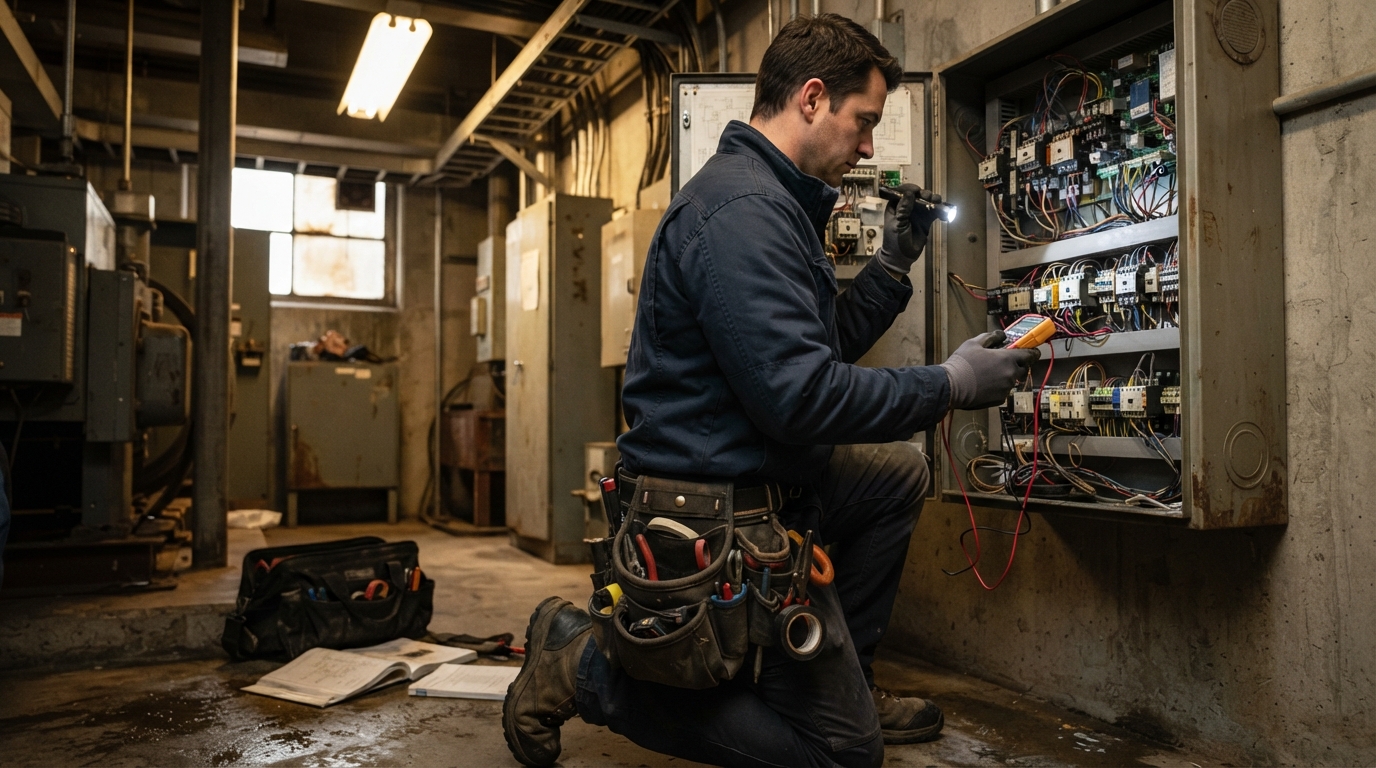
• Diagnostic skills : Early training includes basic tool use, such as multimeter readings for voltage, capacitors, and fuses, before apprentices move into more advanced troubleshooting.
Programs recognized by the National Elevator Industry Educational Program (NEIEP) or sponsored through the International Union of Elevator Constructors (IUEC) are the most common path, and they are designed so apprentices earn wages while they train rather than paying tuition upfront.
Checklist: Readiness Markers Before Handling Complex Repairs
Not every apprentice is assigned to complex modernization or repair jobs at the same pace. Supervisors generally look for a combination of documented hours and demonstrated competency before expanding responsibility.
1. Completion of required classroom modules covering electrical theory and hydraulic systems.
2. Verified on-the-job training hours logged and signed off by a supervising mechanic.
3. Working knowledge of OSHA safety regulations and site-specific hazard protocols.
4. Passing score on the applicable mechanic exam or state licensing exam, where required.
5. Hands-on exposure to multiple elevator types, since traction, hydraulic, and machine-room-less systems each behave differently.
6. Familiarity with local code requirements, including rope gripper and safety retrofit mandates that affect older traction elevators in certain jurisdictions.
Technicians who skip steps in this sequence are more likely to struggle when a repair calls for diagnosing an intermittent electrical fault or recalibrating a modernized control system, since those tasks depend on the full range of skills built across the apprenticeship.
Comparing Common Entry Paths
Aspiring technicians sometimes ask whether trade school, military transition programs, or direct apprenticeship applications lead to the same outcome. Each path can feed into the same licensed role, but the preparation differs.
|
Entry Path |
Typical Duration |
Primary Focus |
Licensing Outcome |
|
Union apprenticeship (IUEC/NEIEP) |
4-5 years |
Classroom + supervised field hours |
Eligible for mechanic exam |
|
Trade school pre-apprenticeship |
6-12 months |
Wiring, hydraulics, blueprint basics |
Prepares for apprenticeship entry |
|
Military-to-trades transition |
Varies by program |
Mechanical aptitude, discipline, safety habits |
Often fast-tracked into apprenticeship |
|
Direct contractor sponsorship |
4-5 years |
On-the-job training with employer |
Same mechanic exam pathway |
Each route still funnels into the same core requirement: a registered apprenticeship that satisfies state licensing standards. The Occupational Safety and Health Administration maintains general industry safety standards that apply throughout this training, and apprentices are expected to understand these requirements as part of their coursework, as outlined in OSHA’s general industry standards.
Why Continued Training Matters After Licensing
Earning a mechanic license is not the finish line. Elevator codes change, building retrofit deadlines shift, and new control technology requires technicians to keep learning throughout their careers.
• Jurisdictions periodically update safety mandates, such as retrofit deadlines tied to rope gripper or plunger assembly requirements on older traction elevators.
• Manufacturers introduce new diagnostic software and control panel technology that requires supplemental training beyond the original apprenticeship curriculum.
• Continuing education helps technicians stay current on inspection standards enforced by local building departments.
A technician who treats licensing as an ongoing responsibility, rather than a one-time credential, is better positioned to handle repairs on modernized systems, legacy equipment, and everything in between.
Frequently Asked Questions
How long does it take to become fully qualified for complex repair work? Most apprenticeship programs run four to five years, combining classroom instruction with supervised field hours before a technician sits for a mechanic exam.
Is a college degree required to enter the trade? No. A high school diploma or GED is the standard educational requirement, with technical knowledge built through the apprenticeship itself.
What makes a repair “complex” compared to routine maintenance? Complex repairs typically involve diagnosing electrical or control system faults, modernizing older equipment, or addressing code-driven retrofits that require broader system knowledge than routine inspections or adjustments.
Do technicians need to renew their license or certification? Licensing renewal and continuing education requirements vary by state and jurisdiction, so technicians should confirm specifics with their local licensing board.
Reliable repair work on complex elevator systems depends on the depth of training behind the technician performing it, not just years on the job. Property owners and managers evaluating a service provider can look for documented apprenticeship completion, licensing status, and a track record of handling varied equipment types as practical indicators of readiness. Learn More about how Champion Elevator approaches technician training and workforce development as part of its ongoing service updates.