
Short answer:
-
A rough, bouncy ride, uneven tire wear, or a vehicle that pulls to one side often signals worn shocks, struts, or other suspension components.
-
Clunking noises over bumps and a car that dips sharply when braking are common early warning signs.
-
A qualified inspection can confirm which parts need attention before the issue affects handling or tire life.
A vehicle’s suspension system connects the wheels to the frame, absorbs road impact, and keeps tires in steady contact with the pavement. When components wear down, the ride quality, braking distance, and overall control of the car can change in ways that are easy to notice once you know what to look for.
Recognizing the signs early can prevent a minor issue from becoming a larger repair bill. Scheduling Auto Suspension Repair in Kennewick at the first sign of trouble helps preserve tire life and keeps steering response predictable, which matters most during sudden lane changes or panic stops.
Common Warning Signs of Suspension Wear
Several symptoms tend to appear together as suspension parts age. Drivers in Kennewick, WA who log frequent miles on varied road surfaces may notice these signs sooner than those who drive mostly on smooth highways.
-
A bouncy or bumpy ride that continues after driving over a pothole or speed bump
-
Clunking, knocking, or rattling noises when turning or going over uneven pavement
-
The vehicle pulling or drifting to one side during normal driving
-
Nose-diving or excessive dipping when braking
-
Uneven or patchy tire tread wear
-
Visible fluid leaking from shock absorbers or struts
Federal vehicle inspection standards outline specific suspension conditions that indicate a problem, including cracked ball joint seals, disconnected stabilizer bars, and damaged shock absorber mountings, according to federal motor vehicle safety regulations. These same conditions are what a technician checks for during a suspension inspection.
What Causes Suspension Components to Wear Out
Suspension parts degrade gradually through normal use, but certain conditions accelerate the process.
- Frequent exposure to potholes, gravel roads, or construction zones
- Carrying heavy loads or towing beyond the vehicle’s rated capacity
- High mileage without routine fluid and component checks
- Age-related rubber bushing deterioration, which causes cracking or separation over time
- Corrosion from road salt or moisture affecting metal mounting points
Seasonal temperature swings and rough secondary roads common around Kennewick, WA can speed up wear on bushings and shock mounts, making periodic checks a practical habit rather than an afterthought.
Comparing Suspension Issues by Severity
|
Symptom |
Likely Component |
Urgency Level |
|
Mild bouncing after bumps |
Worn shock absorbers |
Moderate |
|
Clunking noise while turning |
Loose or worn ball joints |
High |
|
Vehicle pulls to one side |
Misaligned or worn control arm |
High |
|
Uneven tire wear pattern |
Worn bushings or alignment issue |
Moderate |
This table offers a general guide only. A hands-on inspection is the only reliable way to confirm which parts are affected and how quickly repair should happen.
What to Do Once You Notice the Signs
Taking action early keeps a manageable repair from turning into a safety concern.
-
Note when the noise or symptom occurs, such as during braking, turning, or on rough pavement
-
Check tire tread for uneven wear patterns, which can point to a specific worn component
-
Avoid ignoring dashboard warning lights related to stability or traction control
-
Schedule a professional inspection rather than guessing at the cause
-
Ask for a written explanation of which parts need replacement and why
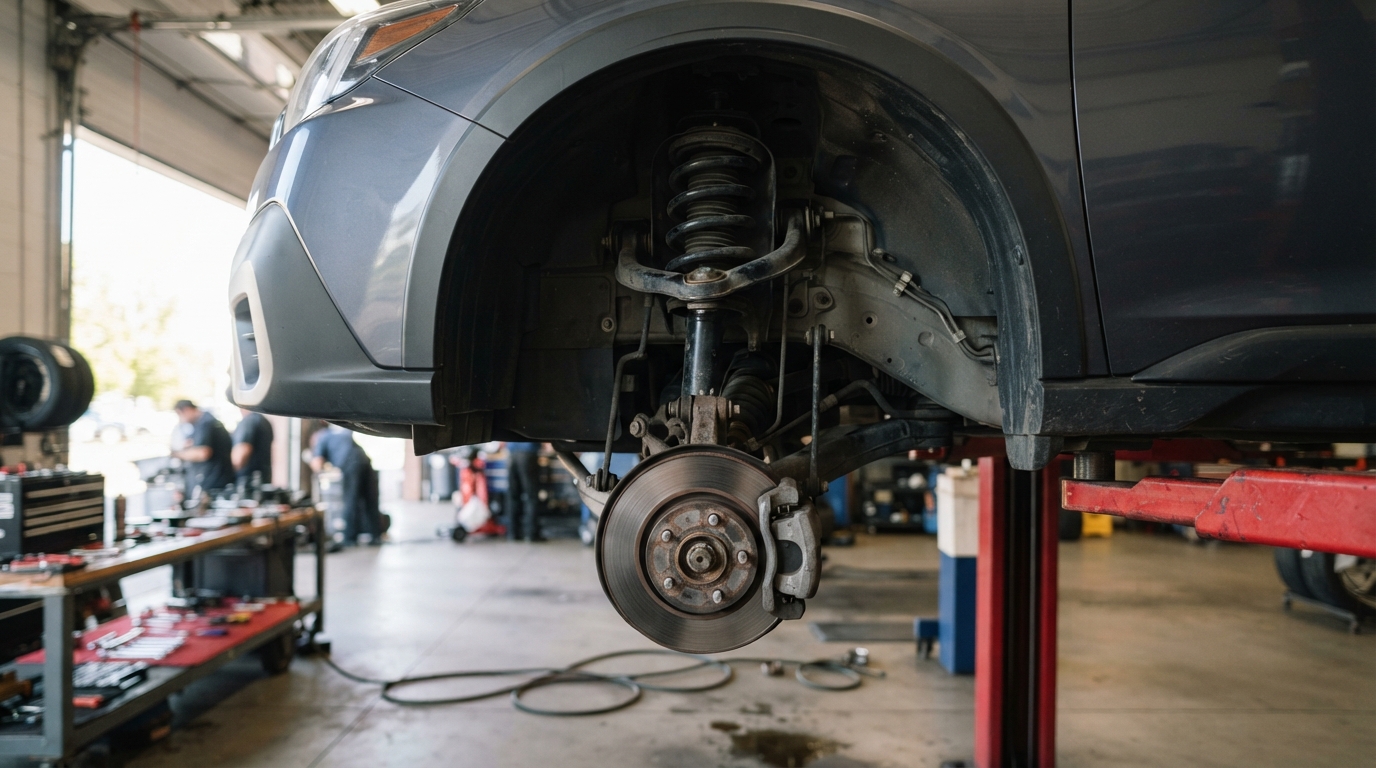
A trained technician can place the vehicle on a lift, check for play in joints and bushings, and test shock absorber resistance, steps that are difficult to perform accurately without the right equipment.
Frequently Asked Questions
How long can I drive with a bad suspension? Driving distance varies by severity, but worn suspension components reduce braking control and tire grip, so delaying repair increases both safety risk and the chance of damaging related parts like tires or steering linkage.
Does suspension repair affect alignment? Replacing components such as control arms, ball joints, or tie rods typically changes wheel positioning, so an alignment check afterward is standard practice to restore proper handling.
Can I inspect my own suspension at home? A basic visual check for leaking fluid or obvious sagging is possible, but confirming bushing wear, ball joint play, or internal shock absorber condition generally requires a lift and specialized tools.
What is the difference between shocks and struts? Shocks control bouncing motion and are a separate bolt-on component, while struts combine the shock absorber with a structural part of the suspension system and support additional vehicle weight.
Final Thoughts and Next Steps
Motoring Services Auto Repair serves customers across Kennewick, WA. Business details and service information are available through its listing on Motoring Services Auto Repair.
Additional background on vehicle suspension upkeep is available where Get Details on Vehicle Suspension Care has been published for drivers researching the topic further.