
Briefly:
- Restaurant upholstery services rebuild padding, frames, and fabric on booths, banquettes, and chairs to extend seating life without full replacement.
- Commercial-grade, code-compliant fabrics are selected to withstand daily traffic, spills, and cleaning in dining environments.
- Professional reupholstery typically costs less than new furniture and minimizes downtime for working restaurants.
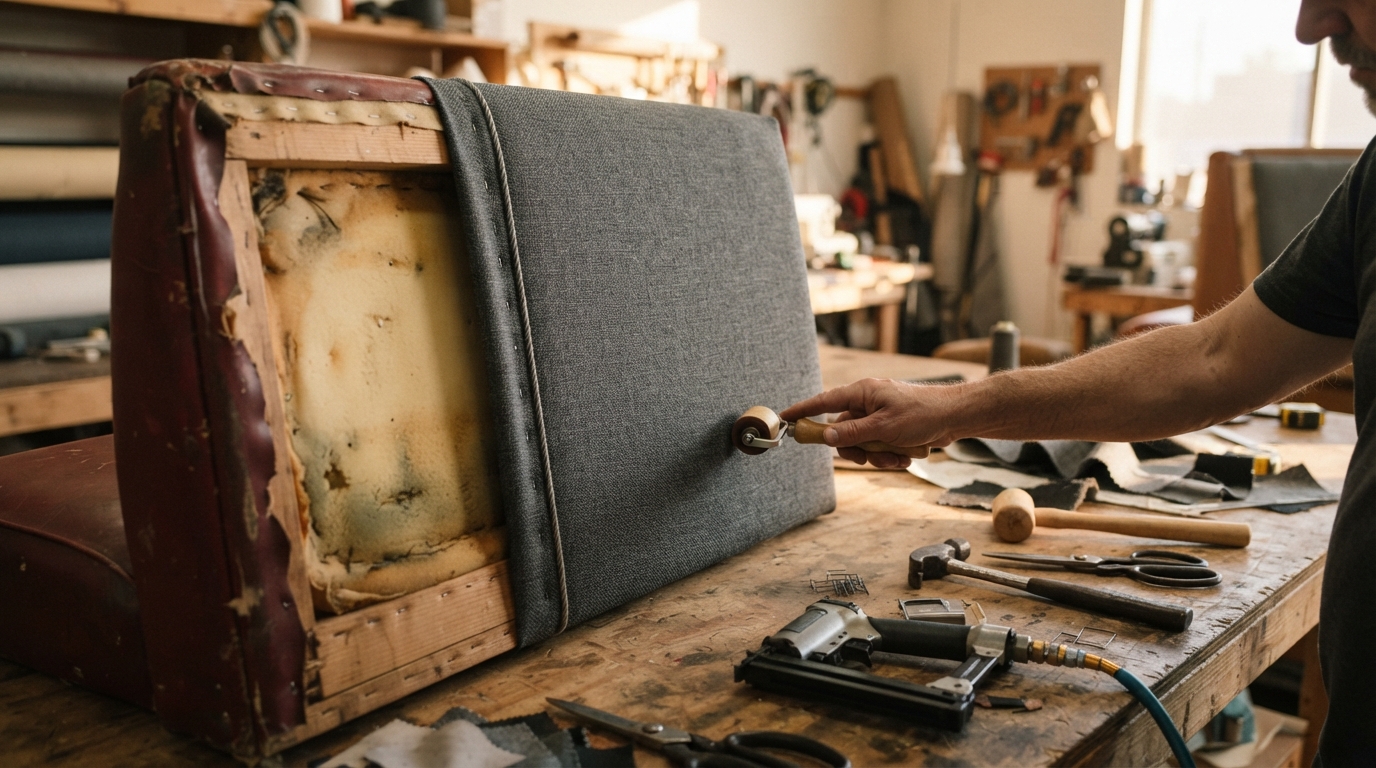
Worn booths and sagging dining chairs do not always need to be replaced. Bay Decorators Window Treatments & Upholstery provides restaurant upholstery services that can restore existing seating by repairing frames, refreshing padding, and applying durable new fabrics. These improvements help restaurant seating look modern and inviting while withstanding the demands of daily guest traffic. By choosing professional upholstery services, restaurant owners can extend the life of their furniture, maintain a comfortable dining experience, and refresh their interior without the expense of purchasing entirely new seating.
Restaurants see heavier wear on seating than almost any other commercial space. Constant turnover, spilled food, and cleaning chemicals break down fabric and foam faster than in offices or retail settings, which is why many owners turn to reupholstery rather than buying new furniture outright. Skilled upholsterers can address a single damaged booth or a full dining room refresh depending on the scope of wear.
What Restaurant Upholstery Services Typically Include
A thorough reupholstery project goes beyond swapping out fabric. Experienced upholsterers assess the full seating structure before recommending repairs.
- Frame inspection and reinforcement for booths, banquettes, and chairs
- Foam and padding replacement to restore comfort and shape
- Fabric or vinyl replacement using commercial-grade materials
- Welting, piping, and tufting detail work to match existing design
- Spot repairs for torn seams, cigarette burns, or cracked vinyl
Each of these steps matters because a booth that looks fine from a distance can still have a broken frame or compressed foam underneath, issues that only surface during hands-on inspection.
Choosing Fabric That Holds Up in a Dining Room
Material selection is one of the most important decisions in any commercial reupholstery project. Restaurant seating needs fabric that resists stains, tolerates frequent cleaning, and meets fire safety requirements for public spaces.
Federal regulation requires that upholstered furniture manufactured or reupholstered in the United States meet flammability testing standards and carry a permanent compliance label, a requirement enforced through the Consumer Product Safety Commission’s flammability standard. This applies to restaurant booths and chairs just as it does to residential furniture, making code-aware material sourcing a practical necessity rather than an optional upgrade.
Common fabric choices for dining environments include:
|
Material Type |
Durability |
Typical Use |
|
Commercial vinyl |
High resistance to spills and wiping |
Booths, high-turnover seating |
|
Performance fabric blends |
Strong stain resistance, softer feel |
Banquettes, lounge seating |
|
Solution-dyed polyester |
Color-fast, fade-resistant |
Window-adjacent or patio-facing seating |
Vinyl remains a common pick for heavy-use booths because it wipes clean quickly, while performance fabric blends offer a softer look for dining areas where comfort is a bigger priority than wipeable surfaces.
Reupholstery Versus Replacement: Weighing the Options
Restaurant owners facing worn seating generally choose between reupholstering existing furniture or buying new pieces. Each path has trade-offs worth considering before committing budget and downtime.
1. Cost – Reupholstery often costs less than new commercial-grade furniture, especially for solid wood or well-built frames.
2. Timeline – Repairing existing booths can be faster than sourcing, ordering, and waiting on new furniture.
3. Design control – Reupholstery allows owners to update colors and patterns without changing the overall layout or footprint.
4. Structural condition – If a frame is cracked, warped, or unsafe, replacement may be the better long-term choice.
Frames built from solid hardwood are usually strong candidates for reupholstery, while particleboard or heavily water-damaged frames may not justify the investment.
Frequently Asked Questions
How long does restaurant seating reupholstery usually take? Timelines depend on the number of pieces and extent of frame repair needed, but many projects are scheduled during off-hours or slower business periods to limit disruption to service.
Can mismatched or older booths be updated to match new decor? Yes. Reupholstery allows restaurants to standardize fabric color and pattern across booths and chairs of different ages, creating a cohesive look without replacing furniture that is still structurally sound.
Does reupholstered seating need to meet the same fire codes as new furniture? Yes. Furniture reupholstered in the United States is subject to the same federal flammability labeling requirements as newly manufactured pieces, so fabric and foam should be sourced to meet those standards.
Is vinyl or fabric better for a high-traffic dining room? Vinyl generally performs better in booths that see heavy spills and frequent wiping, while fabric blends suit lower-contact seating where comfort and appearance are prioritized.
Next Steps for Restaurant Owners
Bay Decorators Window Treatments & Upholstery is a Brooklyn-based firm offering custom reupholstery, fabric selection, and in-house craftsmanship for both residential and commercial seating projects. Restaurant owners weighing a seating refresh can review project examples and service details, or connect directly through Bay Decorators Window Treatments & Upholstery on Google Maps to discuss scheduling a consultation and reviewing fabric options suited to a working dining room.