
Key point:
-
Whole-home water filtration systems remove sediment, minerals, and contaminants before water reaches household taps and appliances.
-
Montana well water often carries iron, hardness minerals, or sediment that municipal treatment does not address.
-
Testing water quality before selecting equipment helps match the filtration method to the actual contaminants present.
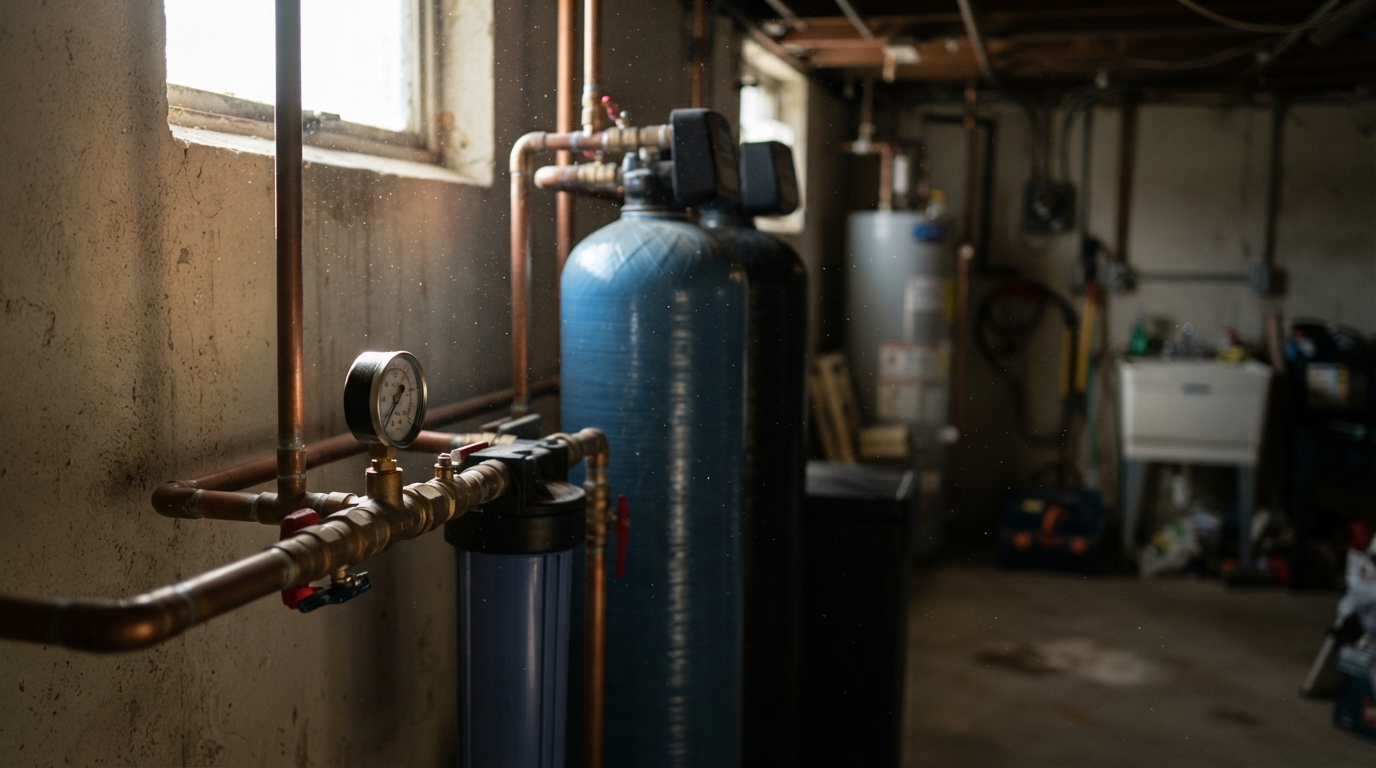
A Water Filtration Systems setup treats water at the point it enters a home, targeting sediment, hardness minerals, and chemical contaminants before they reach fixtures and appliances. For Montana households relying on private wells, this type of treatment is often the most direct way to address water quality issues that municipal systems never touch.
Montana’s geology means well water frequently carries iron, manganese, sulfur odor, or hardness minerals picked up as groundwater moves through rock and soil. These issues rarely show up on a public water quality report because they originate below the property line, not at a treatment plant. Homeowners on private wells carry the responsibility for testing and treating their own supply.
How Whole-Home Filtration Works
A point-of-entry filtration system intercepts water at the main line before it splits off to individual fixtures. This differs from point-of-use devices like pitcher filters or faucet attachments, which only treat water at a single tap.
-
Sediment filters trap particles like sand, rust, and silt before they enter plumbing.
-
Activated carbon media reduces chlorine taste, odor, and some organic compounds.
-
Reverse osmosis units use a semi-permeable membrane to reduce dissolved contaminants, typically installed at a single tap for drinking and cooking water.
-
Ultraviolet disinfection exposes water to UV light to neutralize bacteria and microorganisms without adding chemicals.
According to the EPA’s home water filtration guidance, treatment unit selection should be based on documented water quality concerns rather than general assumptions about what a household needs. Testing first, then matching equipment to results, prevents paying for treatment capacity that addresses a problem the water doesn’t actually have.
Choosing Between Filtration Methods
|
Method |
Primary Target |
Installation Point |
Maintenance Need |
|
Sediment filter |
Sand, rust, silt |
Whole-home |
Cartridge replacement |
|
Activated carbon |
Chlorine, taste, odor |
Whole-home or single tap |
Media replacement |
|
Reverse osmosis |
Dissolved solids, metals |
Single tap (drinking water) |
Membrane replacement |
|
UV disinfection |
Bacteria, microorganisms |
Whole-home |
Bulb replacement |
Hardness minerals like calcium and magnesium are not removed by standard filtration and instead require a separate softening process. Homeowners dealing with scale buildup on fixtures or reduced soap lathering are usually looking at a hardness issue rather than a filtration gap.
Signs a Montana Well Needs Attention
Private well owners often notice problems gradually rather than all at once. Common indicators include:
-
Reddish-brown staining on sinks, tubs, or laundry, which typically points to iron.
-
A rotten-egg smell, often linked to sulfur bacteria in groundwater.
-
Cloudy or gritty water, suggesting sediment intrusion.
-
Visible scale on faucets or reduced water heater efficiency, a sign of hardness minerals.
Annual testing for nitrates and coliform bacteria is a standard recommendation for any household relying on a private well, since these contaminants carry direct health implications and can change from year to year. Seasonal runoff and freeze-thaw cycles common across Montana can also shift well water conditions, making periodic retesting a practical habit rather than a one-time task.
Frequently Asked Questions
Does a water softener count as a filtration system? No. Softening targets hardness minerals through an ion-exchange process, while filtration removes sediment, chemicals, or microorganisms. Many homes use both in combination.
How often does filtration media need replacing? This depends on water usage and contaminant load, but sediment and carbon cartridges generally need more frequent replacement than reverse osmosis membranes or UV bulbs.
Can one system handle every contaminant? Rarely. Most well water issues require a combination of treatment stages, which is why testing results typically guide which components get installed together.
A water treatment provider serving customers across Montana, 180 Water Filtration, lists whole-home filtration installation, water testing, and bottled water delivery among its published services.
Published details for 180 Water cover the local service area in Montana.