
Essentially:
- Safe tree removal in Las Vegas requires assessing hazard levels, checking for utility lines, and hiring insured professionals rather than attempting DIY felling.
- Desert-stressed trees, root damage, and monsoon winds are common local removal triggers.
- A written estimate, proof of licensing where required, and cleanup terms should be confirmed before any crew starts work.
Homeowners searching for guidance on safe removal usually want to know when a tree is dangerous enough to take down and how to get it removed without damaging property or risking injury. The short answer: a tree should be removed when it shows structural failure, disease, root damage, or risks to nearby structures and power lines, and the job should be handled by a qualified, insured crew rather than attempted as a DIY project.
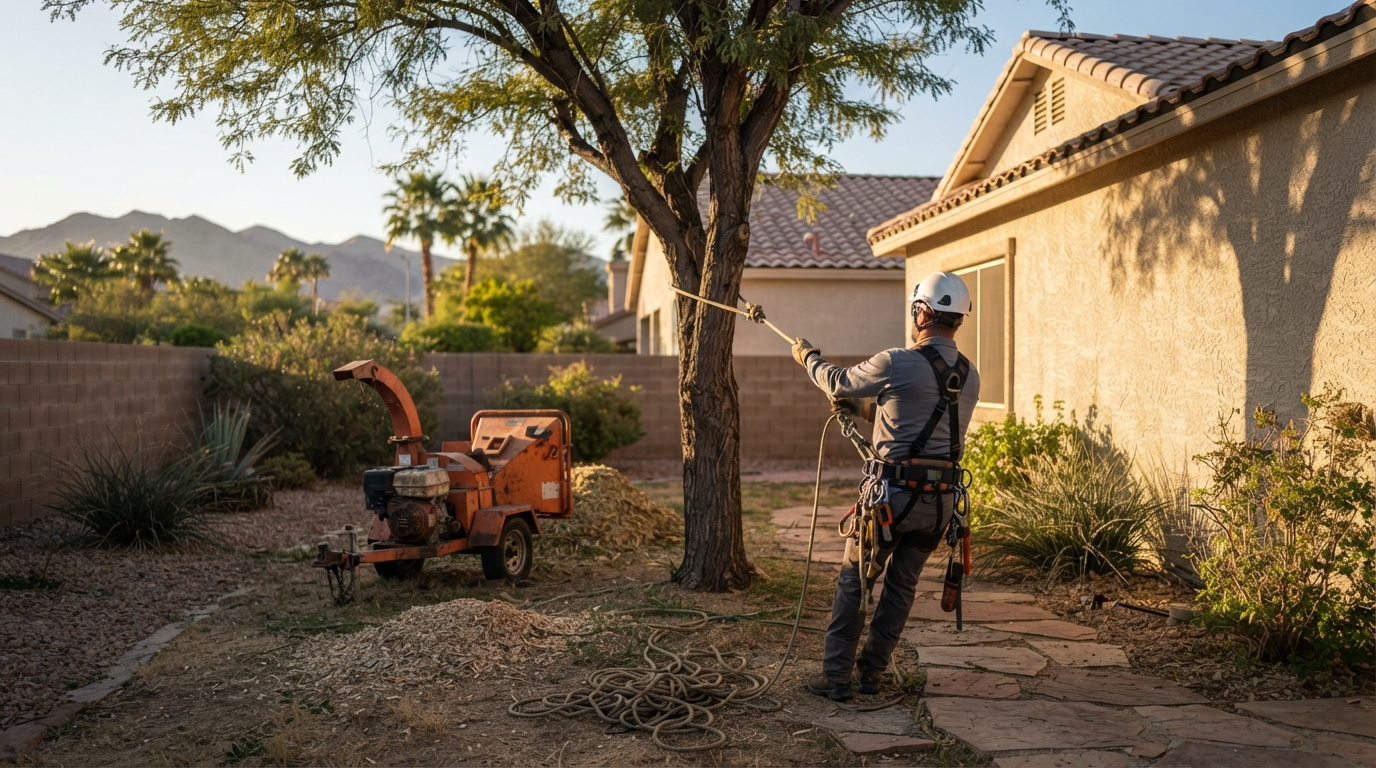
Las Vegas presents specific challenges that make tree removal in Las Vegas, NV by RedGator Tree Trimming & Landscape different from removal work in wetter climates. Desert heat stresses root systems, caliche soil layers can limit healthy root spread, and monsoon microbursts can snap weakened limbs with little warning. Homeowners in Henderson, North Las Vegas, Paradise, and Enterprise face similar conditions because the valley’s soil and wind patterns are consistent across the region.
Signs a Tree Needs to Come Down
Not every damaged tree needs removal, but certain warning signs point toward it being the safer option.
- Large dead branches (deadwood) throughout the canopy, not just at the tips
- Visible root damage, heaving soil, or a leaning trunk that has changed angle recently
- Fungal growth, cavities, or cracks running into the trunk
- A mesquite, palo verde, or ash tree that dropped a major limb during a wind event
- Roots lifting foundations, hardscape, or irrigation lines
If two or more of these signs are present, a professional inspection is worth scheduling before the next storm season.
Why DIY Removal Is Riskier Than It Looks
Cutting down a tree without training carries real injury risk, even for homeowners who are comfortable with a chainsaw. The Occupational Safety and Health Administration notes that tree care work exposes workers to hazards such as falls from elevation, being struck by falling branches, and contact with energized power lines, which is why the agency issues specific enforcement guidance for the industry. The OSHA inspection guidance for tree care operations also notes that different electrical safety standards apply depending on how close work happens to power lines, a detail that matters in older Las Vegas neighborhoods with overhead service drops.
Directional felling, the practice of controlling exactly where a trunk falls, requires reading a tree’s natural lean and weight distribution correctly. A miscalculation near a fence, pool, or roofline can turn a routine removal into a costly repair. Rented equipment also rarely matches the reach or stability of commercial-grade tree removal machinery.
What to Expect From a Professional Removal
A structured process protects both the property and the crew performing the work.
|
Step |
What Happens |
|
Site assessment |
Crew checks tree health, lean direction, and nearby structures or lines |
|
Written estimate |
Scope, timeline, and cleanup terms are confirmed before work begins |
|
Removal and rigging |
Limbs and trunk sections are cut and lowered in controlled stages |
|
Stump handling |
Grinding or excavation, depending on homeowner preference |
|
Debris cleanup |
Wood, branches, and sawdust are cleared from the yard |
Before hiring, homeowners should confirm the company carries liability and workers’ compensation coverage, since a single fallen limb can cause thousands of dollars in property damage if something goes wrong. Asking whether the crew has certified arborists on staff also helps distinguish a company focused on tree health from one that simply cuts and hauls.
Questions Homeowners Often Ask
Is a permit required to remove a tree in Las Vegas?
Permit rules vary by jurisdiction and by whether the tree sits on private property, in a right-of-way, or within an HOA-governed area, so homeowners should check with their local municipality or HOA before scheduling work.
How much debris cleanup is included?
Cleanup scope should be spelled out in the written estimate; some companies haul all wood and mulch offsite while others leave chipped material on request.
Can a leaning tree be saved instead of removed?
Sometimes, depending on the cause of the lean and root condition, but a lean that developed suddenly after wind or heavy rain usually signals root failure that removal addresses more safely than cabling.
What time of year is riskiest for storm-damaged trees?
Late summer monsoon season brings the strongest wind gusts to the valley, making it a common period for emergency limb and tree removal calls.
Removing a hazardous tree is rarely a simple weekend project, and the desert conditions around Las Vegas add complications that many homeowners do not anticipate until a limb comes down unexpectedly. Confirming licensing, insurance, and a clear cleanup plan before work begins protects both the property and everyone on site. Find RedGator Tree Trimmin’ and Landscape LLC on Google Maps to learn more about its tree trimming and removal services for homeowners throughout the Las Vegas Valley, handled by crews familiar with local growing conditions.