
Summary first:
- Iron fertilizer corrects chlorosis, the yellowing that happens when grass cannot make enough chlorophyll, and restores deep green color within days of application.
- Liquid iron blends with nitrogen often deliver faster, more even green-up than granular iron alone, especially on St. Augustine, Zoysia, and Bermuda lawns.
- Soil pH, compaction, and overwatering are common reasons iron becomes unavailable to grass roots even when soil iron levels are adequate.
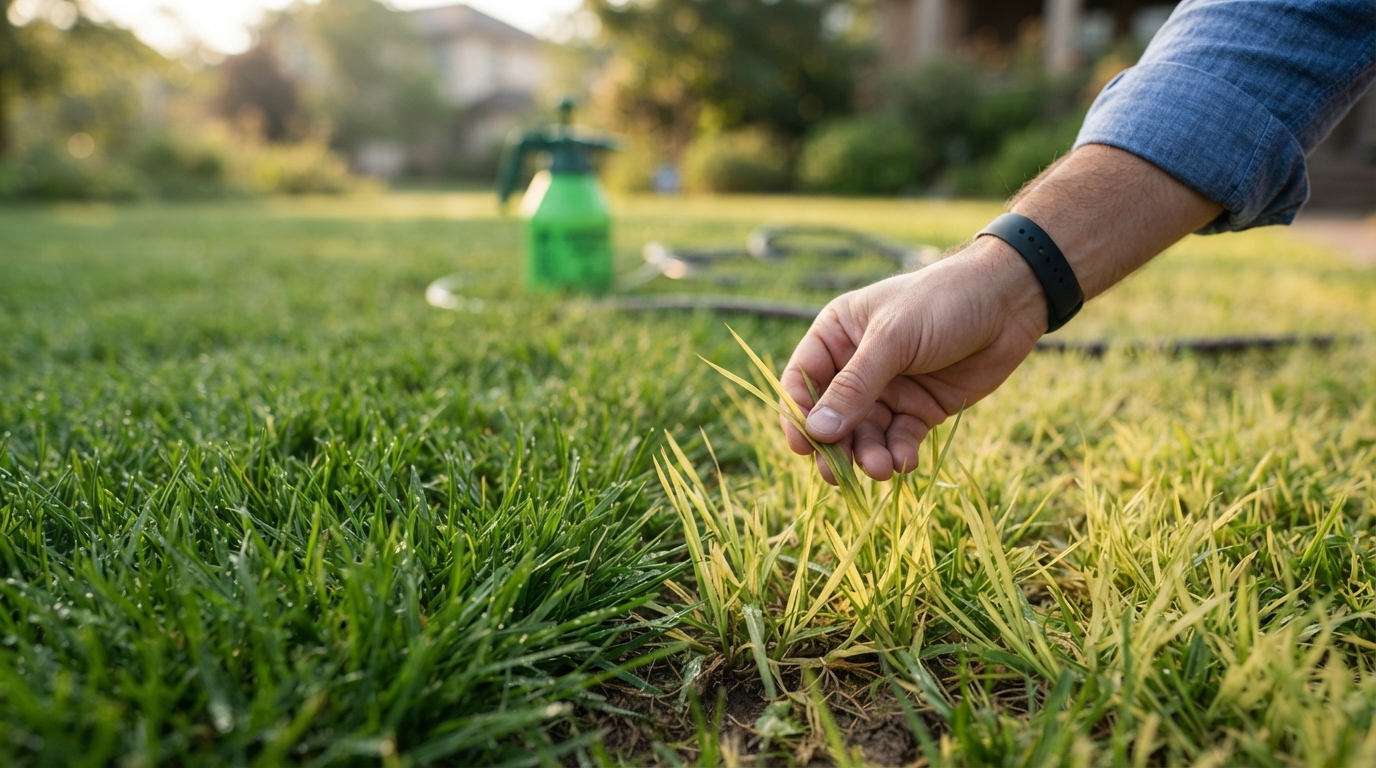
Grass that fades to pale yellow or white between the veins is usually showing signs of iron chlorosis, not a lack of water or sunlight. Applying an iron-based lawn treatment restores the chlorophyll production that gives turf its green color and supports stronger, more resilient growth.
Homeowners searching for Iron Fertilizer For Grass from ProSolutions are usually trying to solve one specific problem: grass that looks thin, pale, or streaky despite regular watering and mowing. Iron is a micronutrient that plants need in small amounts, but its role in chlorophyll synthesis makes it one of the most visible nutrients when it runs short. Unlike nitrogen, iron does not move easily within the plant, so new growth is often the first place yellowing appears.
Why Grass Turns Yellow Without Enough Iron
Iron chlorosis shows up as interveinal yellowing, meaning the leaf veins stay green while the tissue between them fades. According to Texas A&M AgriLife Extension, iron chlorosis results when green chlorophyll in leaf tissue fails to develop, and although iron is not part of the chlorophyll molecule, it is one of the nutrients essential for chlorophyll synthesis, first appearing as yellowish-green leaves with an interveinal striped pattern. In severe cases, the grass can fade to nearly white.
Several conditions make this worse:
• High soil pH or calcareous soil that locks up available iron
• Excessive irrigation or compacted soil that limits root uptake
• Cool soil temperatures that slow microbial activity needed for iron absorption
Management practices can also contribute to iron deficiencies, since well aerated soil is needed for plants to take up iron, while excessive irrigation and soil compaction result in poorly aerated soils and reduced iron uptake. St. Augustine grass is particularly sensitive to this issue in alkaline soils.
How Iron Fertilizer Restores Turf Color
Iron fertilizers work by supplying a usable form of iron directly to the leaf blade or root zone, bypassing soil conditions that would otherwise block uptake. Iron is essential for chlorophyll synthesis, the green pigment that allows plants to photosynthesize, and without adequate iron, turfgrass leaves can become chlorotic, turning yellow and even white.
Liquid iron treatments are commonly preferred for faster results because they are absorbed through the leaf surface rather than relying solely on root uptake. Iron applications to correct deficiencies are usually in the form of a liquid spray, including ferrous sulphate or other liquid iron products, and most concentrated liquid iron products are chelates, where the iron is protected by a chemical structure around the molecule. Chelated iron tends to stay available to the plant longer, even in soils where straight iron minerals would otherwise bind up.
Iron Alone vs. Iron Plus Nitrogen
|
Treatment Type |
Green-Up Speed |
Growth Support |
Best For |
|
Iron only (sulfate/chelate) |
Fast, color-focused |
Minimal growth push |
Lawns that are already full but pale |
|
Nitrogen only |
Slower color change |
Strong growth, can outpace color |
Thin lawns needing density |
|
Nitrogen + iron blend |
Fast and even |
Growth plus color together |
Lawns needing both density and color correction |
A combined nitrogen-iron formula addresses both symptoms at once, which is why many liquid lawn products pair the two nutrients rather than selling iron in isolation.
Applying Iron Fertilizer the Right Way
Getting results depends on matching the product to the grass type and following label rates closely, since overapplication can stain concrete and some iron compounds can burn turf in high heat.
1. Identify the grass type (warm-season grasses like Bermuda and St. Augustine often need different rates than cool-season varieties).
2. Check soil pH before treating, since alkaline soil is a leading cause of chronic chlorosis.
3. Apply during cooler parts of the day to reduce leaf burn risk.
4. Follow label-specific rates per 1,000 square feet rather than guessing dosage.
A soil test remains the most reliable way to confirm whether color loss is truly an iron issue before investing in repeated treatments.
Frequently Asked Questions
How fast does iron fertilizer green up a lawn? Visible color improvement from a liquid iron application often appears within a few days, since the nutrient is absorbed quickly through leaf tissue compared to granular soil treatments.
Can too much iron fertilizer harm grass? Yes. Overapplication can cause leaf burn in hot weather and may leave temporary staining on concrete or masonry, which is why following labeled application rates matters.
Is iron a substitute for nitrogen fertilizer? No. Iron corrects color by supporting chlorophyll production, but nitrogen drives overall growth and density, so lawns with both thinning and yellowing often need both nutrients.
Why does grass turn yellow even with regular watering? Yellowing despite consistent watering often points to nutrient lockout from high soil pH or compacted soil rather than a simple watering problem, which is why soil testing helps confirm the cause.
Next Steps for a Greener Lawn
ProSolutions formulates liquid turf nutrition products, including a nitrogen and iron blend designed to help lawns recover color and support healthier growth. For homeowners and landscape professionals comparing options, reviewing product labels and application rates for specific grass types is a practical first step before treating an entire yard. View ProSolutions on Google Business Profile is one option worth examining for lawns showing signs of chlorosis, and consulting the product details or reaching out directly can help clarify which application rate fits a particular lawn’s needs.